Vitamin D3: What It Is Used For and Who May Need It

Vitamin D3, whose technical name is cholecalciferol, is a very special vitamin: the body can produce it in the skin when exposed to the sun. It plays a central role in bone and muscle health, and in recent years it has become one of the most frequently asked-about supplements. Here we review what you should know: what it is used for, where we get it from, who is most at risk of deficiency and why more is not always better.
What is vitamin D3 used for?
Its best-known function is helping the intestine absorb calcium and phosphorus from food. Without enough vitamin D, the body cannot make use of calcium even when the diet provides it, and the bones become weaker. In children, severe deficiency causes rickets; in adults, it contributes to osteomalacia and osteoporosis. It is also involved in muscle function, which is why its deficiency is associated with weakness and a higher risk of falls in older adults.
Where do we get it from?
- The sun: ultraviolet B radiation converts a precursor in the skin into vitamin D3. It is the main source for most people.
- Food: oily fish such as salmon, sardines and tuna, egg yolk and fortified foods.
- Supplements, when prescribed by a doctor.
Who is at higher risk of deficiency?
- Older adults, because their skin produces less vitamin D.
- People who spend little time outdoors or who cover almost all of their skin.
- People with dark skin, who need more sun exposure to produce it.
- People with obesity, in whom the vitamin is stored in fatty tissue.
- People with diseases that impair fat absorption, or with kidney or liver disease.
- People who take certain medicines, such as some anticonvulsants.
Vitamin D3 supplementation
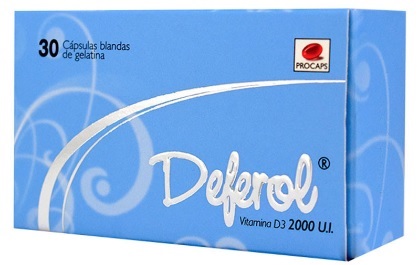
Deficiency is diagnosed with a blood test that measures 25-hydroxyvitamin D. Based on that result, the doctor decides whether a supplement is needed, at what dose and for how long. In patients with osteoporosis, it is usually prescribed as an adjunct to the specific treatment, together with an adequate calcium intake. We carry Deferol (vitamin D3).
Vitamin D3 in children
In babies and children, vitamin D is essential for bones to grow strong. Breast milk is the best food for a baby, but it provides little vitamin D, so the pediatrician assesses whether the child needs a supplement and at what dose. In children and adolescents, outdoor play and a varied diet are the best way to prevent deficiency. No supplement should be given to children without a pediatrician's recommendation, because the doses are different from those for adults.
More is not always better
Vitamin D is fat-soluble: the body stores it and does not easily eliminate the excess. Taking high doses for a long time without monitoring can raise the calcium level in the blood and cause nausea, weakness, intense thirst, confusion and kidney damage. That is why it is not advisable to self-medicate with high doses or to combine several products that contain it without consulting a doctor.
Helpful habits
- Getting brief, moderate sun exposure, without neglecting protection against sunburn.
- Including fish and eggs in the diet several times a week.
- Staying physically active, which strengthens bones and muscles.
You can learn more on the MedlinePlus page about vitamin D (in Spanish).
If your institution needs these products, add them to your list in our online store and request a quote: we will get back to you with availability and prices.
This article is for informational purposes only and does not replace medical advice. The medicines mentioned require a medical prescription and must be used under the supervision of a healthcare professional.