Parenteral nutrition: what it is, when it is used, and how it is prepared

Parenteral nutrition is a way of feeding a patient intravenously, bypassing the digestive tract. Proteins, sugars, fats, minerals, and vitamins reach the bloodstream directly in a mixture tailored to each person. It is a life-saving treatment, but also one of the most complex treatments managed in the hospital.
When is parenteral nutrition indicated?
The general rule is simple: if the gut works, use it. Feeding by mouth or through a tube is safer and keeps the intestine healthy. The intravenous route is reserved for when that is not possible or not enough:
- Bowel obstruction or extensive abdominal surgery.
- Short bowel syndrome.
- High-output intestinal fistulas.
- Severe pancreatitis when the digestive route is not tolerated.
- Premature newborns who cannot yet receive all of their feeding through the digestive tract.
What does a mixture contain?
- Amino acids, which provide protein. For children, there are pediatric formulas adapted to their needs, such as pediatric crystalline amino acids.
- Glucose, the main source of energy.
- Lipids, which provide energy and essential fatty acids.
- Electrolytes, such as sodium, potassium, calcium, magnesium, and phosphate. FP-20 potassium phosphate is one of the additives used to provide phosphorus and potassium.
- Vitamins and trace elements, such as zinc and selenium.
Preparation: a job for the compounding center
Parenteral nutrition mixtures are prepared in compounding centers, in controlled environments and under aseptic technique, because they are given directly into the bloodstream and any contamination can cause a serious infection. The pharmacist verifies that the formula is stable and that its components are compatible with each other: some combinations of calcium and phosphate, for example, can form dangerous precipitates.
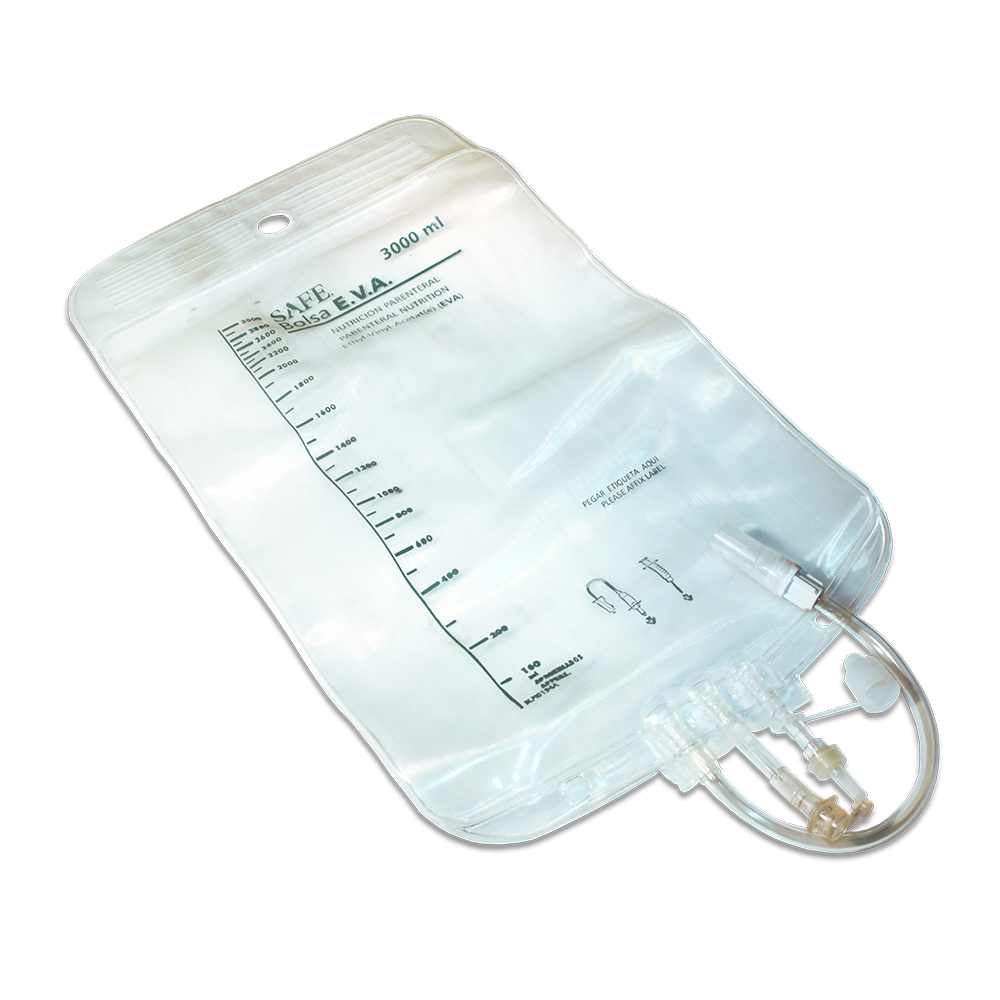
The mixtures are packaged in ethylene vinyl acetate bags, known as EVA bags, a material that is compatible with lipids. We carry EVA bags from 500 to 3,000 mL for parenteral mixtures.
Care during parenteral nutrition
- It is given through a dedicated catheter, which is handled with sterile technique.
- Blood glucose is checked frequently, because high levels are common at the start.
- Electrolytes, liver function, and triglycerides are monitored.
- In severely malnourished patients it is started gradually to avoid refeeding syndrome, in which phosphorus, potassium, and magnesium drop sharply.
- The goal is to return to the digestive route as soon as possible.
Central line and peripheral line
Highly concentrated mixtures, which are the ones that cover all of the patient's needs, are given through a central catheter placed in a large vein, where blood flow quickly dilutes the solution. Less concentrated mixtures can be given through a peripheral vein for short periods, with the risk of irritating the vein. The decision depends on how long the nutrition will be needed and how much intake the patient requires.
Parenteral nutrition at home
Some people, such as those with short bowel syndrome, need intravenous nutrition for months or years. With training, the patient or their family learn to connect and disconnect the mixture at home, following strict hygiene measures, and they receive regular checkups from a specialized nutrition support team. This option allows them to return to their home, their work, and their family life, something that was unthinkable a few decades ago.
You can find information for patients and families about total parenteral nutrition on MedlinePlus.
If your institution needs these products, add them to your list in our online store and request a quote: we will get back to you with availability and prices. Our team can also help you identify the presentations that best fit your institution's needs.
This article is for informational purposes only and does not replace a medical consultation. The medications mentioned require a prescription and must be used under the supervision of a healthcare professional.