How to Take Blood Pressure at Home, Step by Step
Knowing how to take blood pressure at home is one of the most useful tools for controlling hypertension. Home readings give the doctor a more complete picture than a single day's number at the office, as long as they are taken with the correct technique.
Why is it important to monitor blood pressure?
Hypertension almost never causes symptoms, which is why it is called the “silent enemy.” Over time it damages the arteries and increases the risk of heart attack, stroke and kidney disease. According to the World Health Organization, hypertension is defined as blood pressure equal to or higher than 140/90 mmHg on repeated measurements.
Before measuring
- Do not drink coffee, smoke or exercise during the 30 minutes beforehand.
- Go to the bathroom first: a full bladder can raise the reading.
- Sit down and rest for at least five minutes in a quiet place.
The correct posture to take blood pressure
- Sit with your back supported and your feet flat on the floor, without crossing your legs.
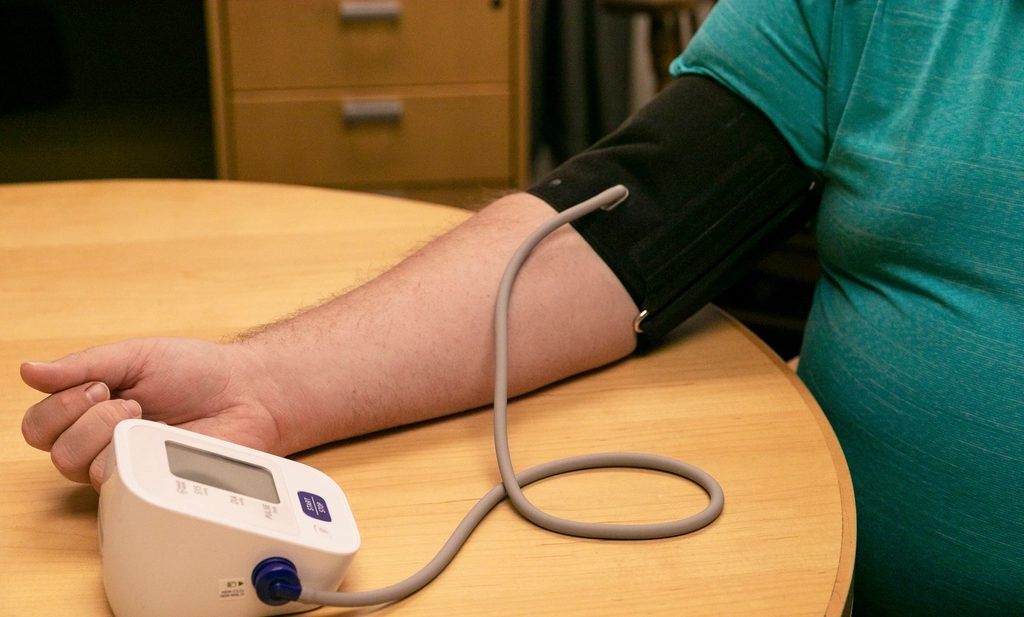
- Rest your arm on a table so that the cuff is at the level of your heart.
- Place the cuff on bare skin, two or three centimeters above the crease of the elbow.
- Do not talk or move during the measurement.
- Take two readings one or two minutes apart and write both down.
Cuff size is key: one that is too small for the arm gives falsely high readings, and one that is too large gives falsely low readings.
Which blood pressure monitor should you choose?
Digital upper-arm monitor: it is the most recommended for home use because it is simple and does not depend on the hearing of the person taking the measurement. It should be a clinically validated model.
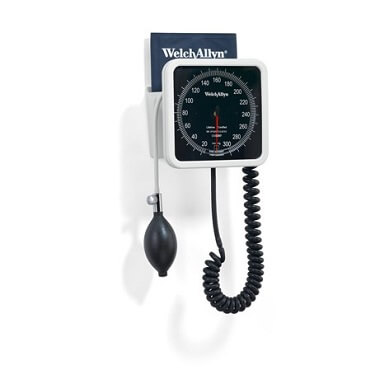
Aneroid: it is used with a stethoscope and requires training, which is why it is more common in medical offices. Wall-mounted models are ideal for medical offices and emergency departments, because they are always at hand and are very durable. In our catalog you will find the Welch Allyn Tycos wall-mounted blood pressure monitor, the wall-mounted aneroid blood pressure monitor and the GMD adult wall-mounted blood pressure monitor.
Common mistakes when measuring
- Measuring right after climbing stairs, eating or arguing.
- Placing the cuff over clothing or leaving it loose.
- Letting the arm hang down, below the level of the heart.
- Taking a single reading and drawing conclusions from it.
- Using a wrist device without keeping the hand at the level of the heart.
Bring your blood pressure monitor to your medical appointment from time to time to compare it with the one at the office: that way you will know whether your readings are reliable. Devices also lose calibration over time and when they are dropped or bumped; aneroid monitors in particular should be checked at least once a year. And remember that habits such as reducing salt, maintaining a healthy weight, getting regular physical activity and not smoking help control blood pressure as much as medicines do.
How to keep a record and when to see a doctor
Keep a log with the date, time, arm and readings, and bring it to your medical appointment. Ideally, measure at the same time every day, for example in the morning before taking your medicines and in the evening.
Seek care immediately if your blood pressure is above 180/120 mmHg, especially if you have chest pain, difficulty breathing, a severe headache, blurred vision or weakness on one side of the body. Never change the dose of your medicines based on a single reading: that decision belongs to your doctor.
If your practice or institution needs blood pressure monitors, request a quote in our online store. You can learn more about hypertension in the fact sheet (in Spanish) from the World Health Organization.
This article is for informational purposes only and does not replace medical advice.